

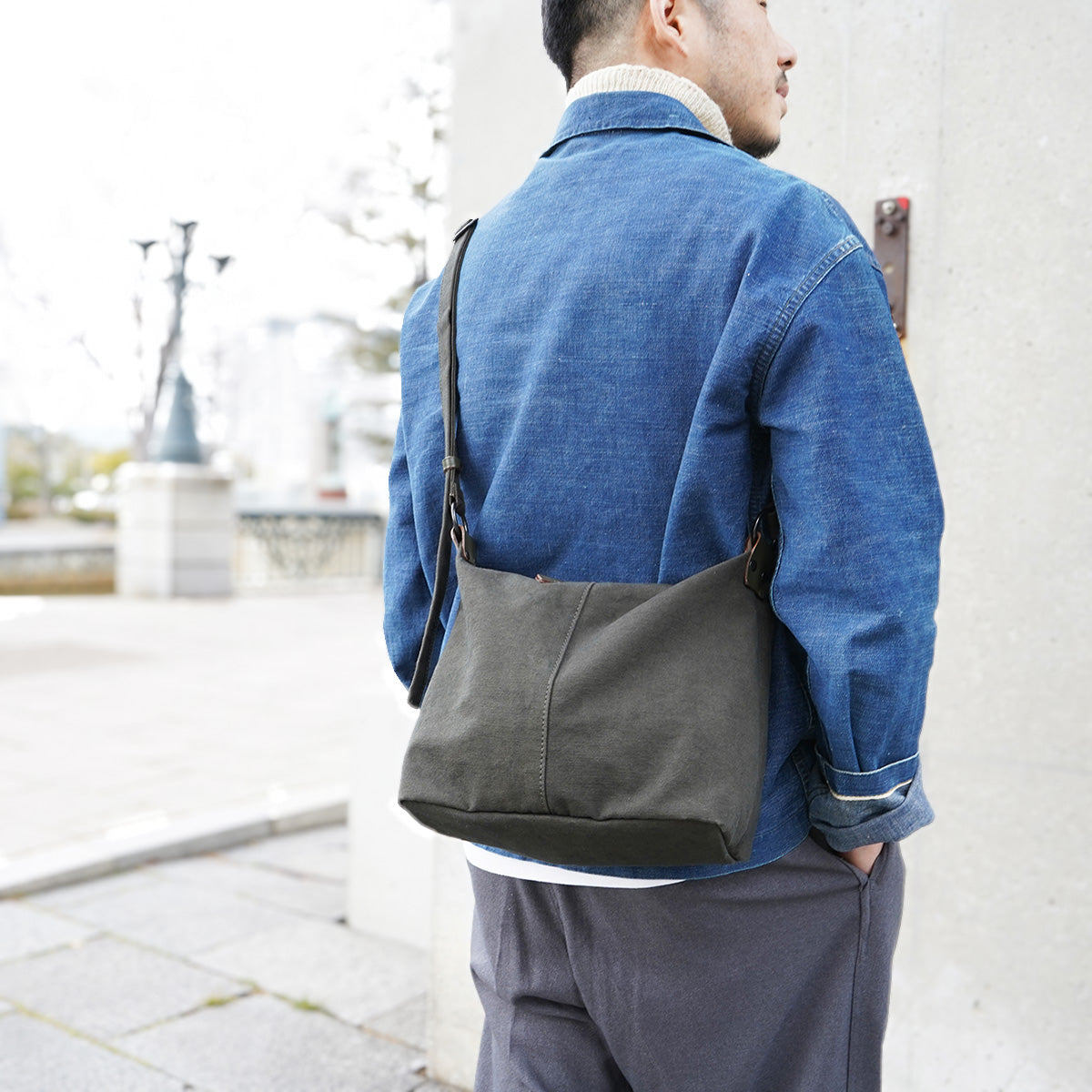
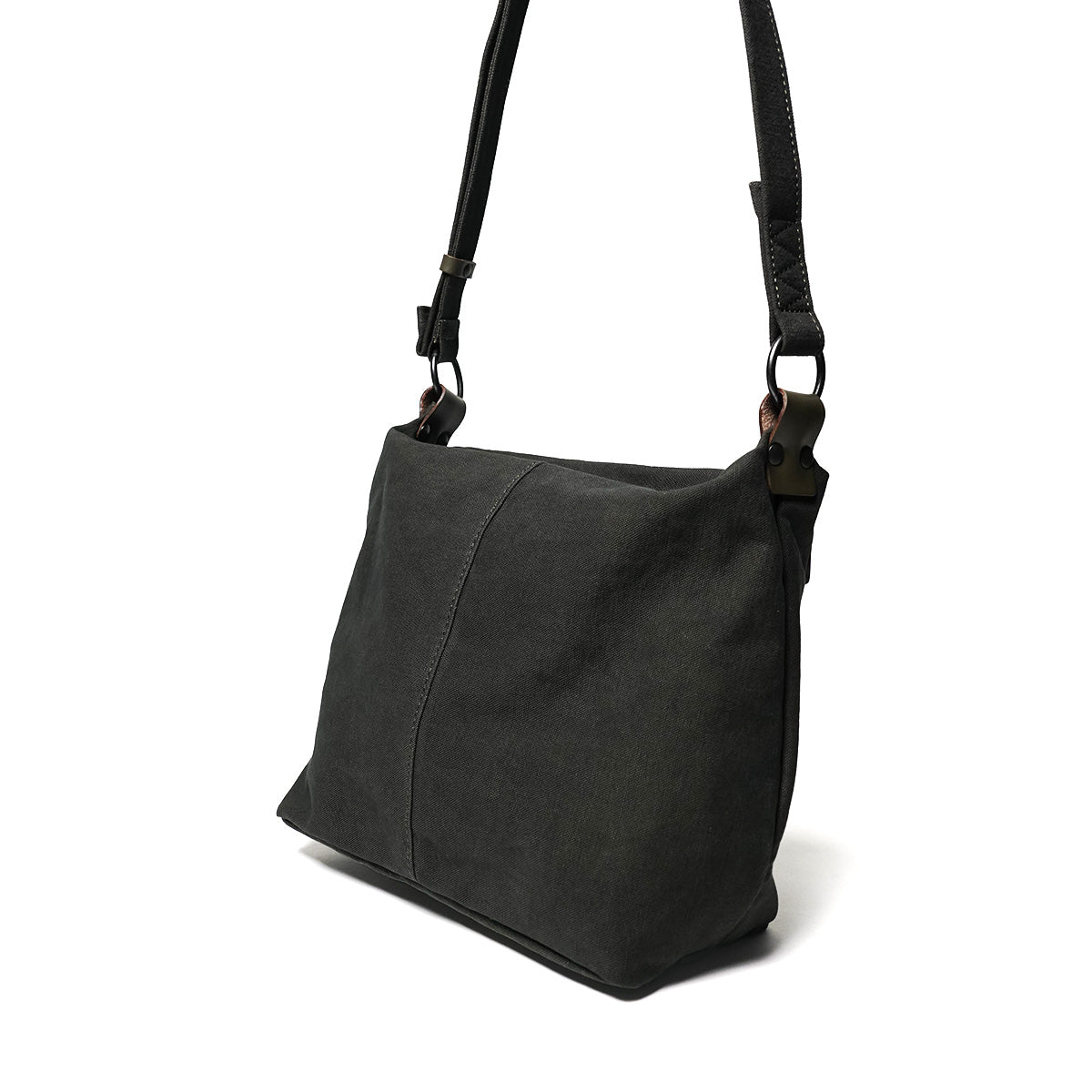
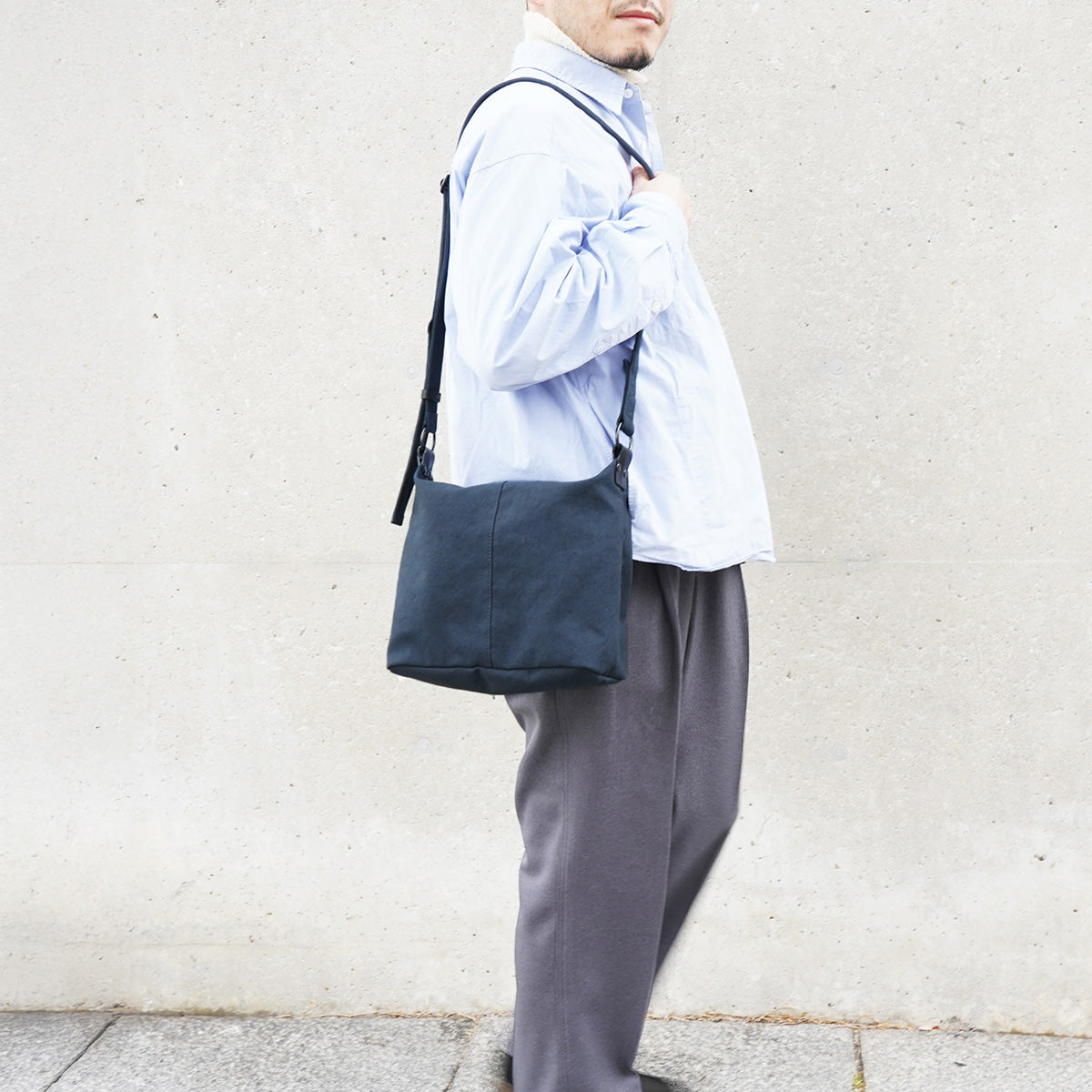
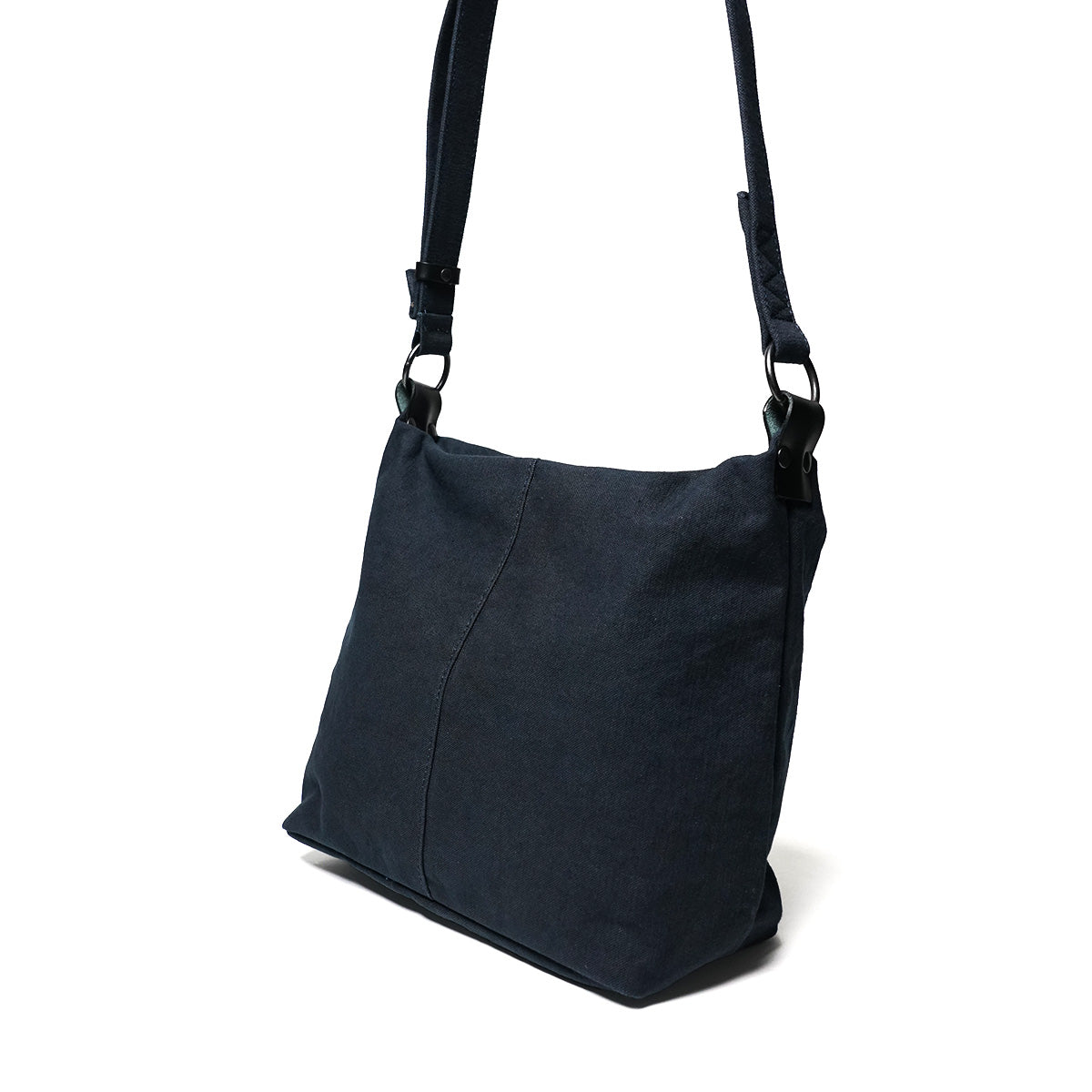
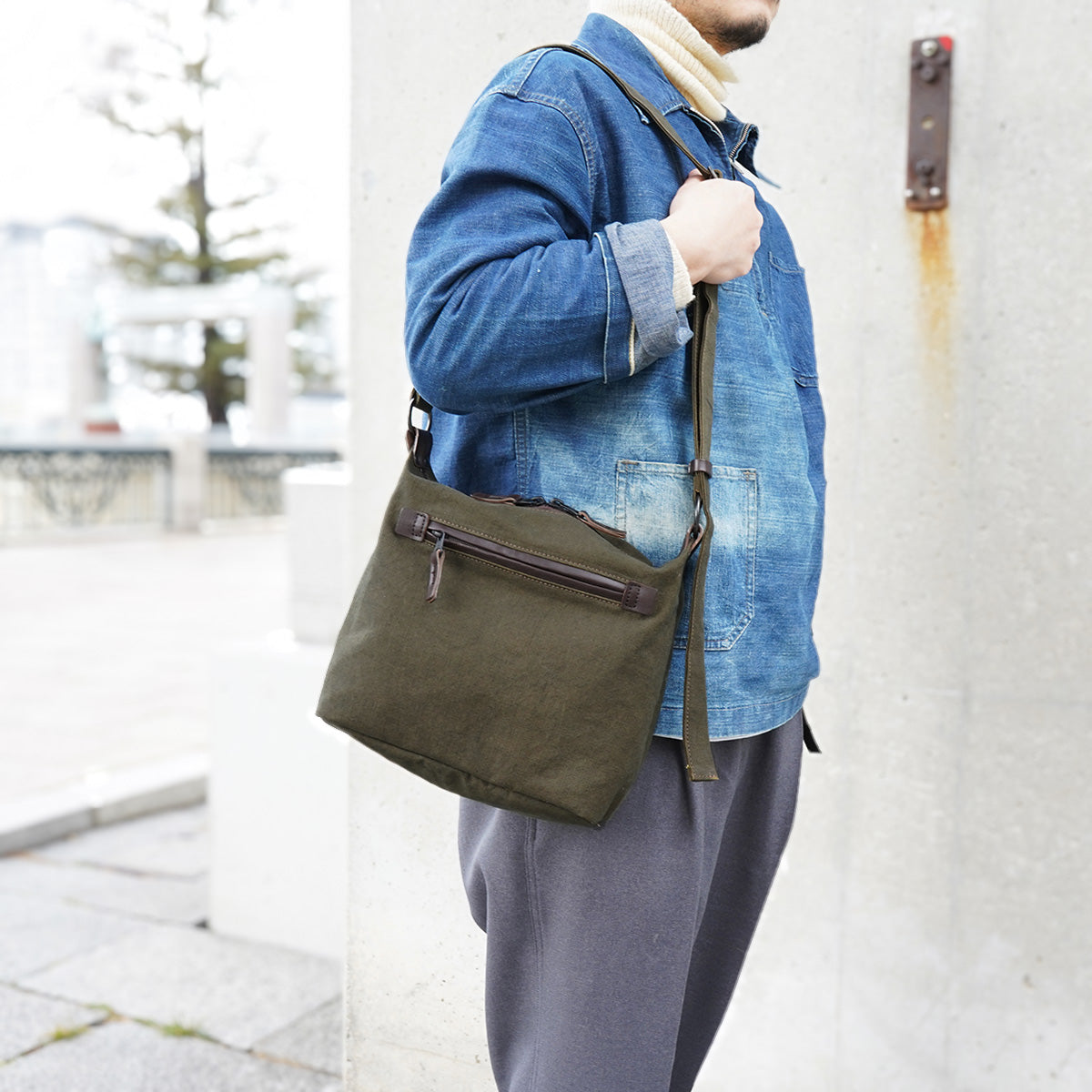
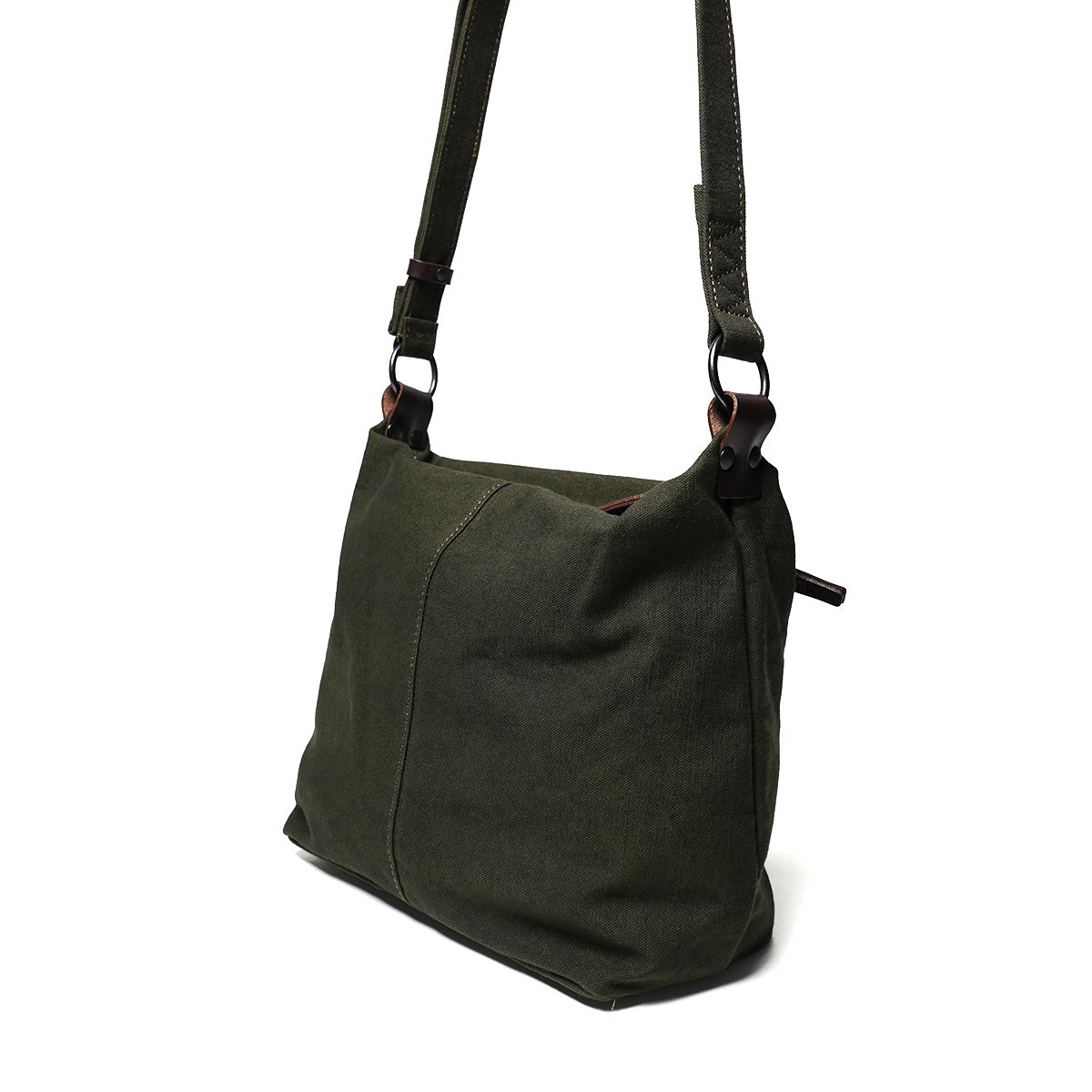
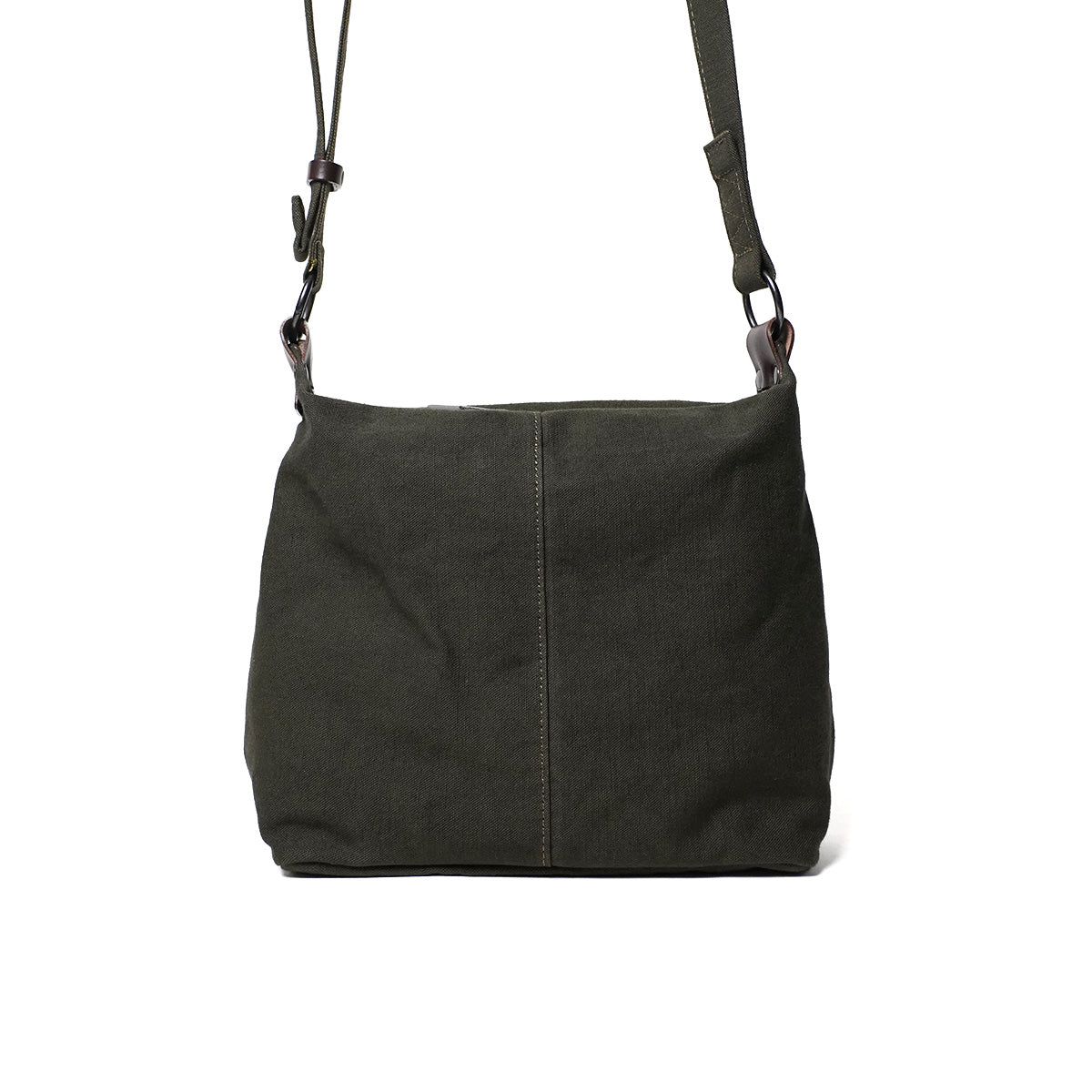
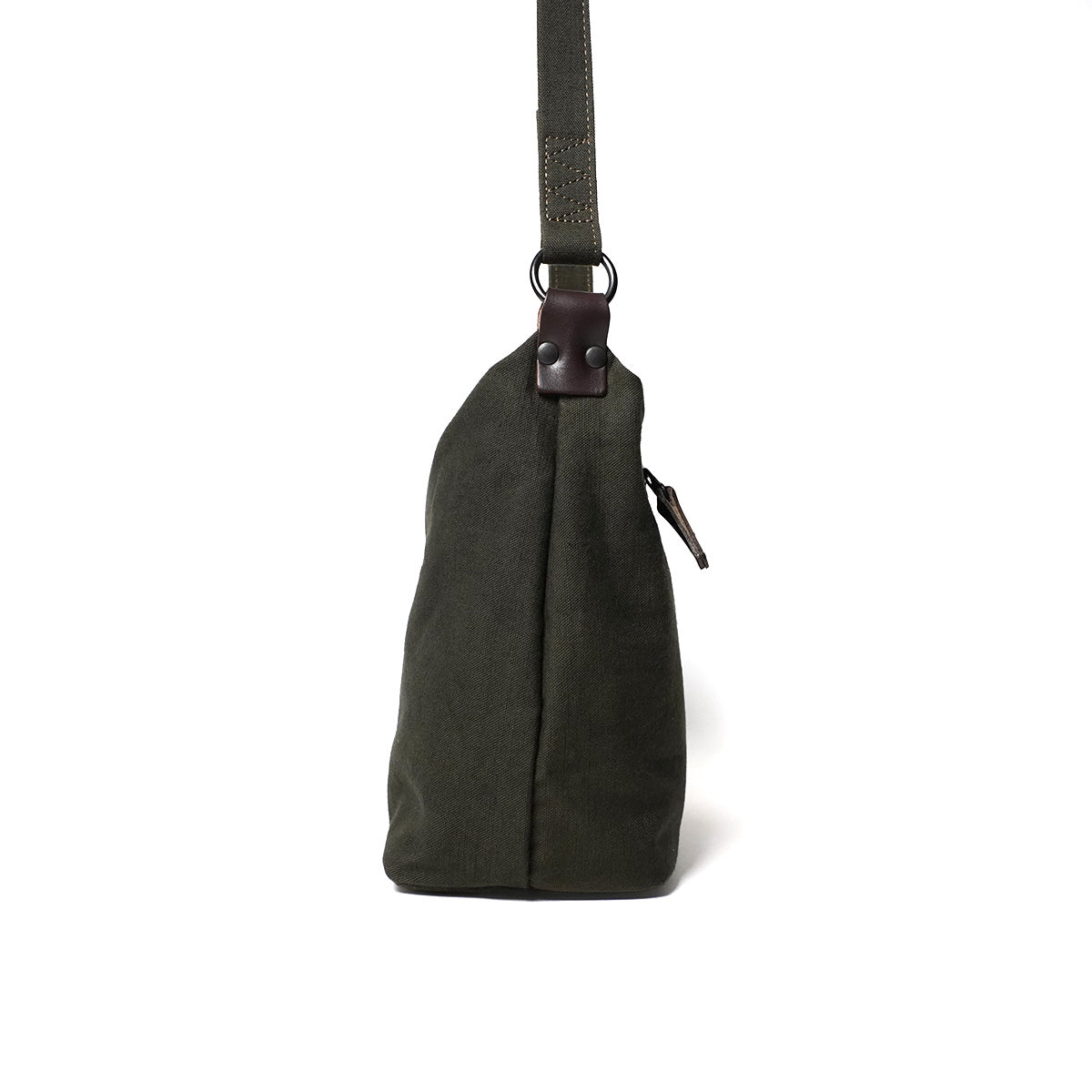
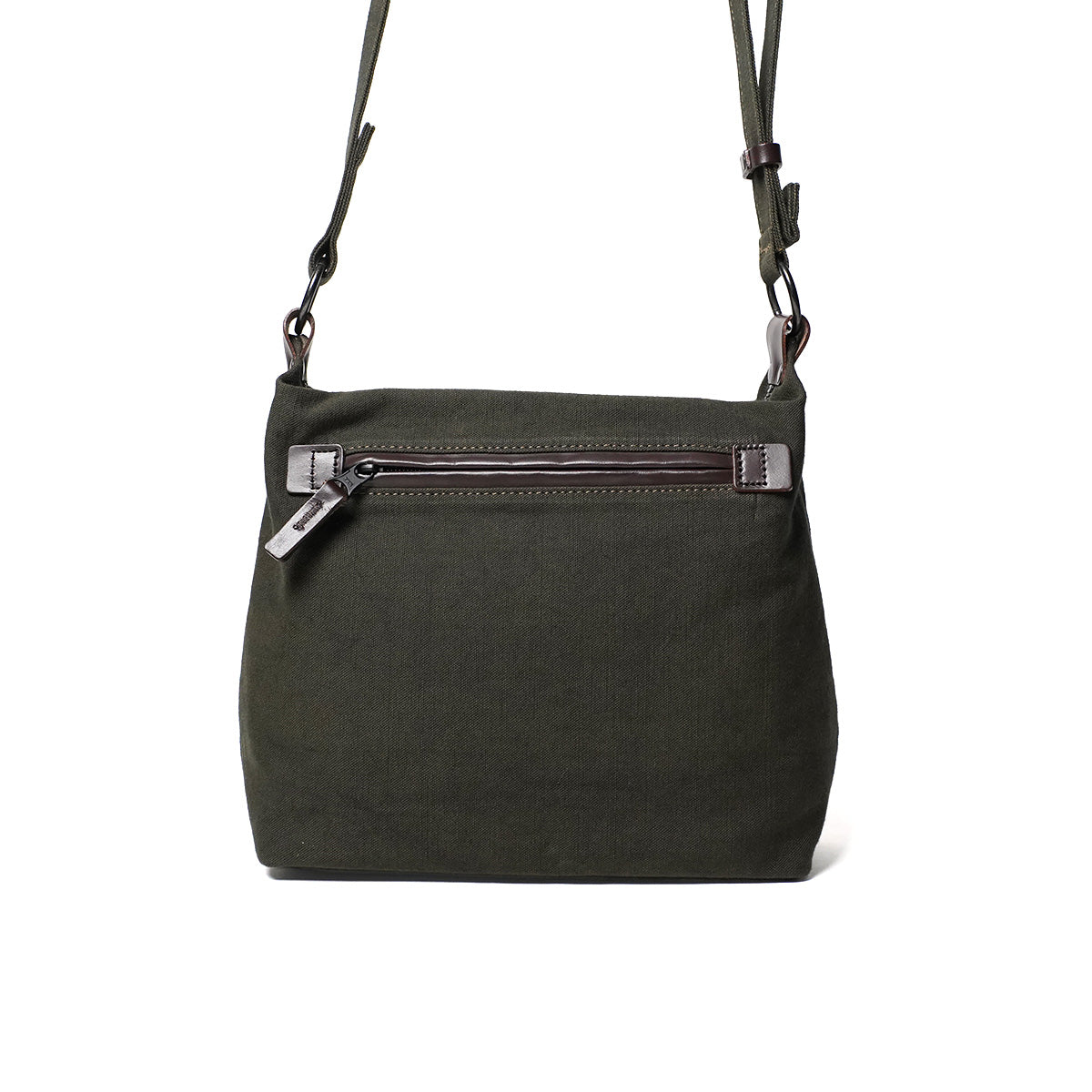

"KUROSABI - Black Rust Dye -"
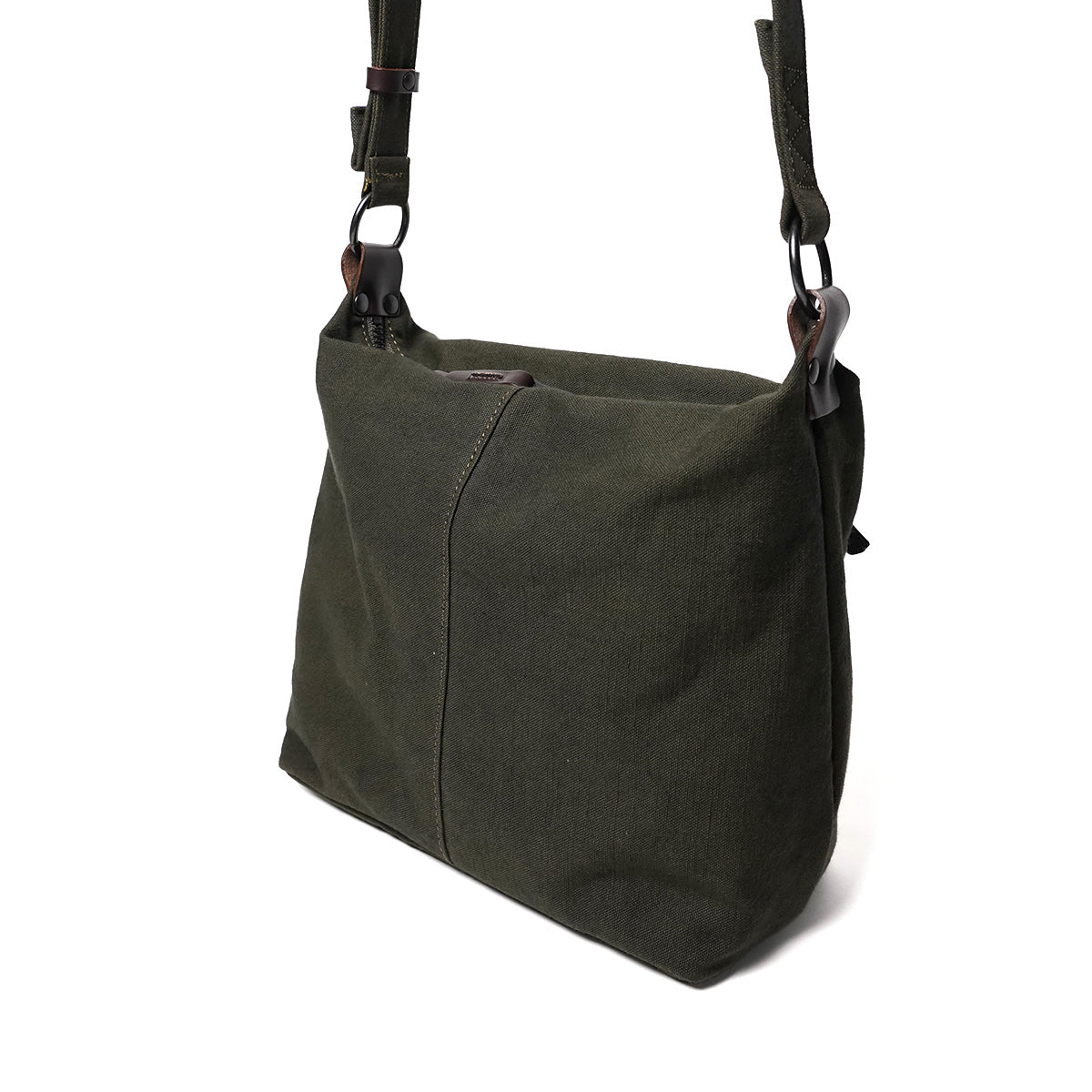
An original BAGGY PORT material, based on ALBERTON's 15oz army duck canvas, which has been repeatedly dyed with a black rust process in Kurashiki, Okayama Prefecture, to create a unique texture.
This material is created through a meticulous process of "washing, drying, rust dyeing, and hang-drying."
"ALBERTON 15oz Army Duck Canvas"
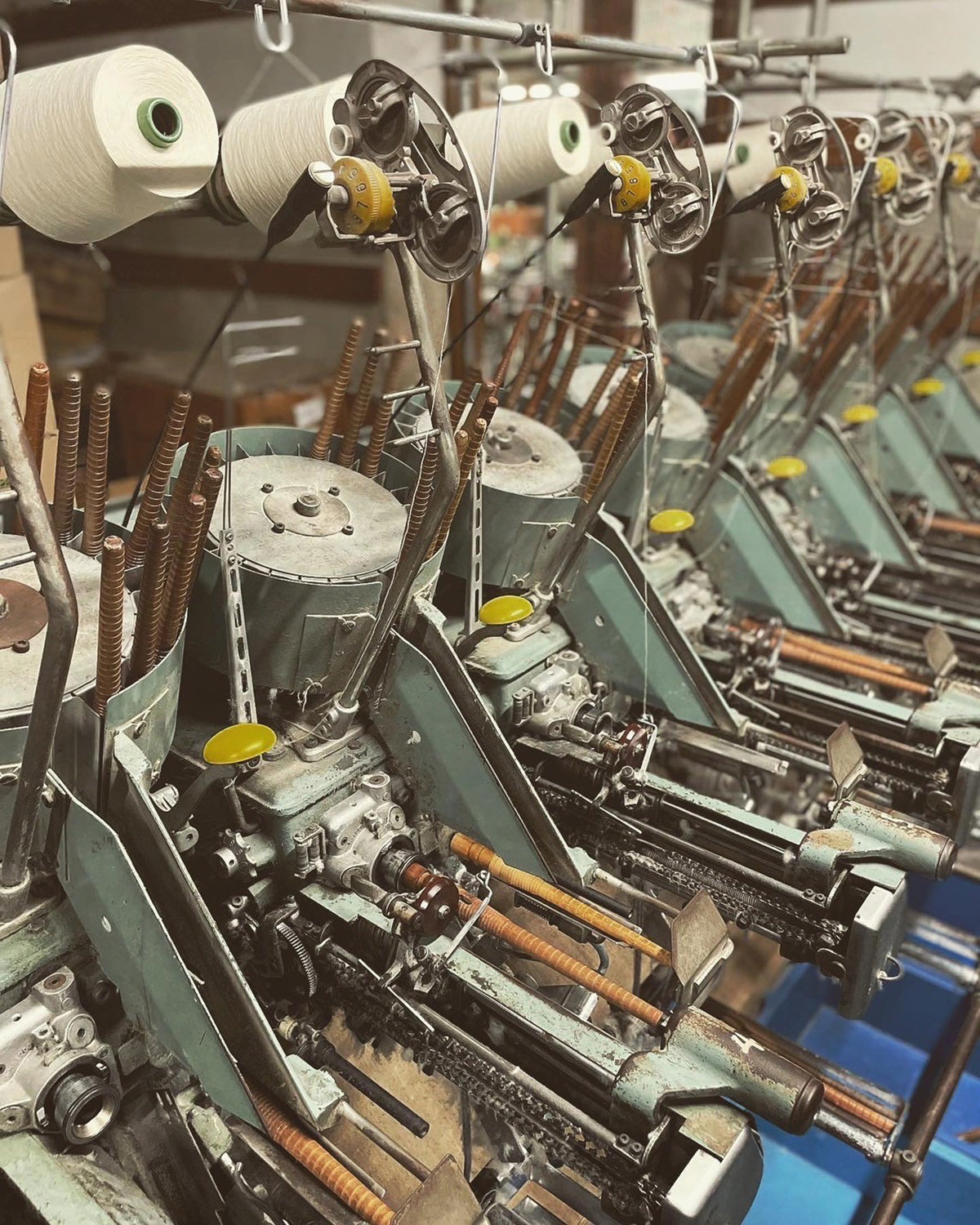
The main material used, "15oz Army Duck Canvas," is modeled after fabrics from the early 1900s. It incorporates slub yarn (yarn with intentionally uneven thickness) to reproduce a vintage texture.
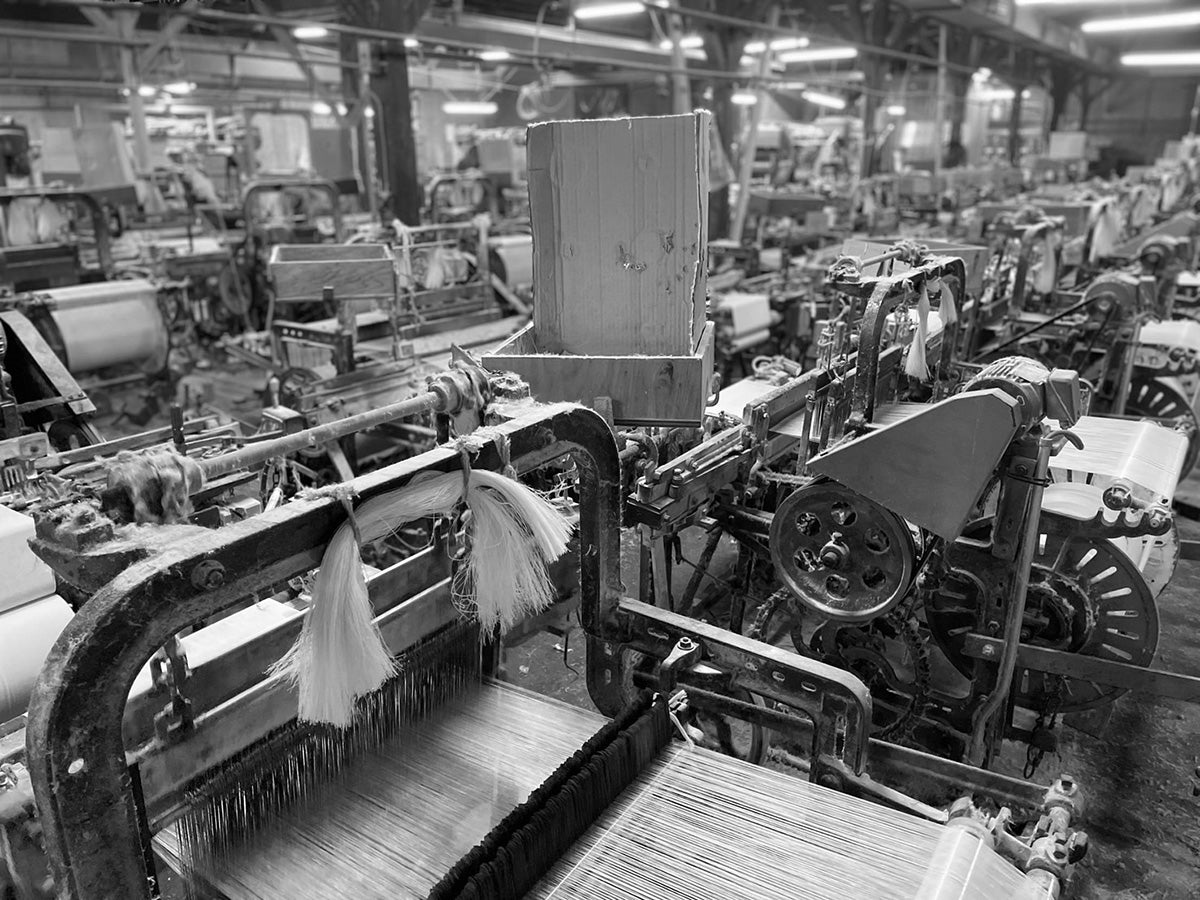
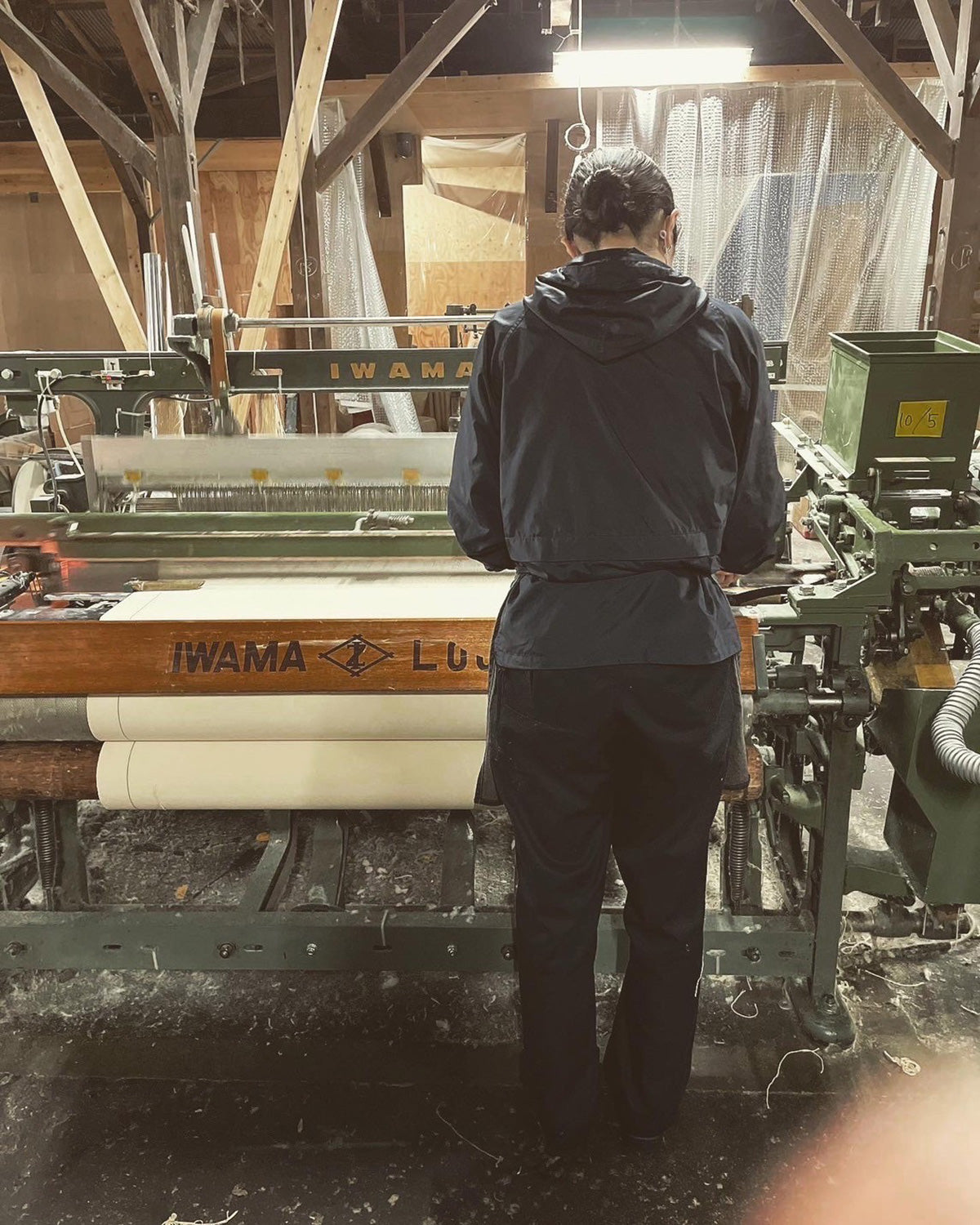
Woven slowly and carefully on shuttle looms over 100 years old, this canvas is a valuable material, with only about 20 meters able to be woven per day.
"Timeless Simple Design"
This shoulder bag features a sophisticated, simple design that blends naturally with any outfit. Its timeless style, unaffected by trends, ensures long-lasting enjoyment.
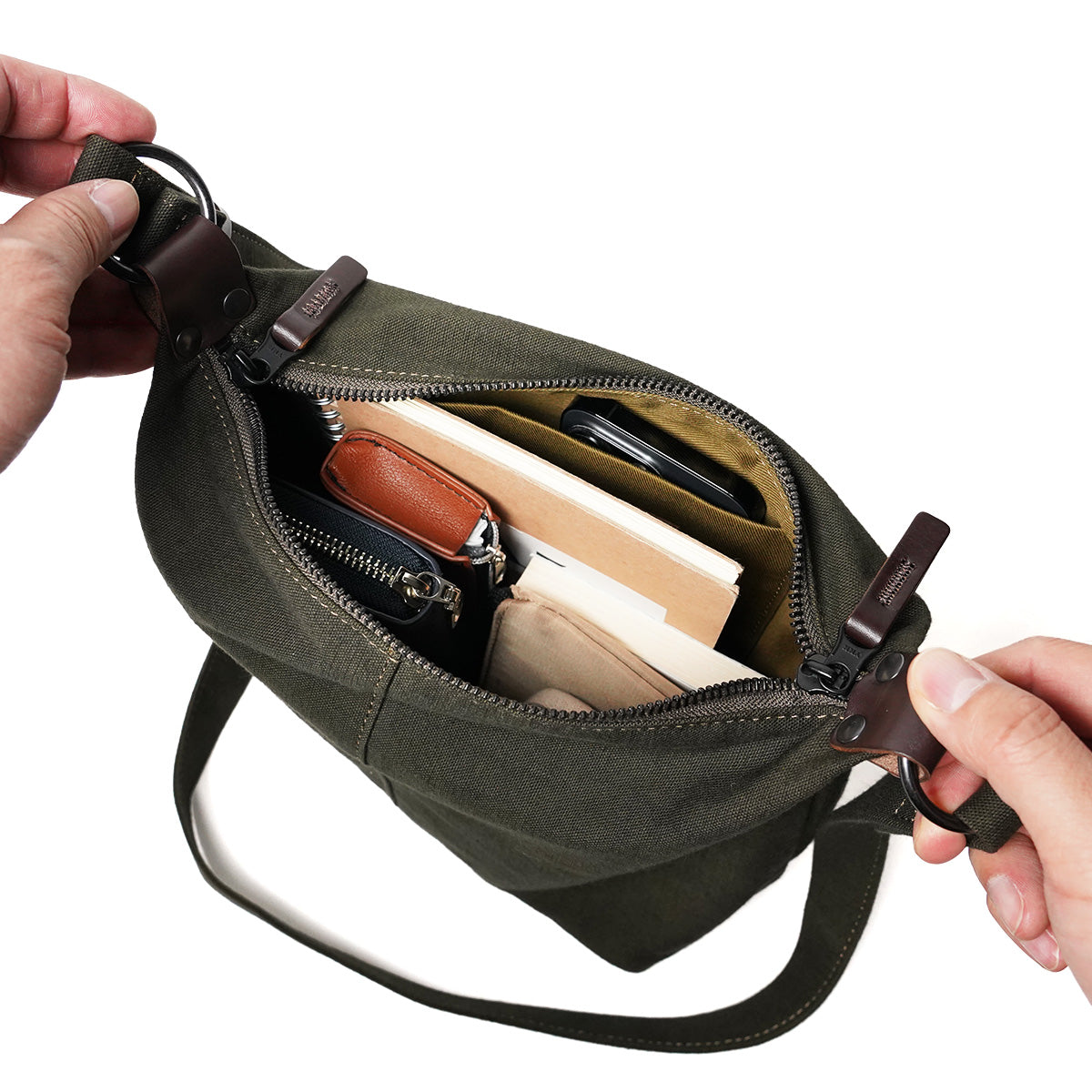
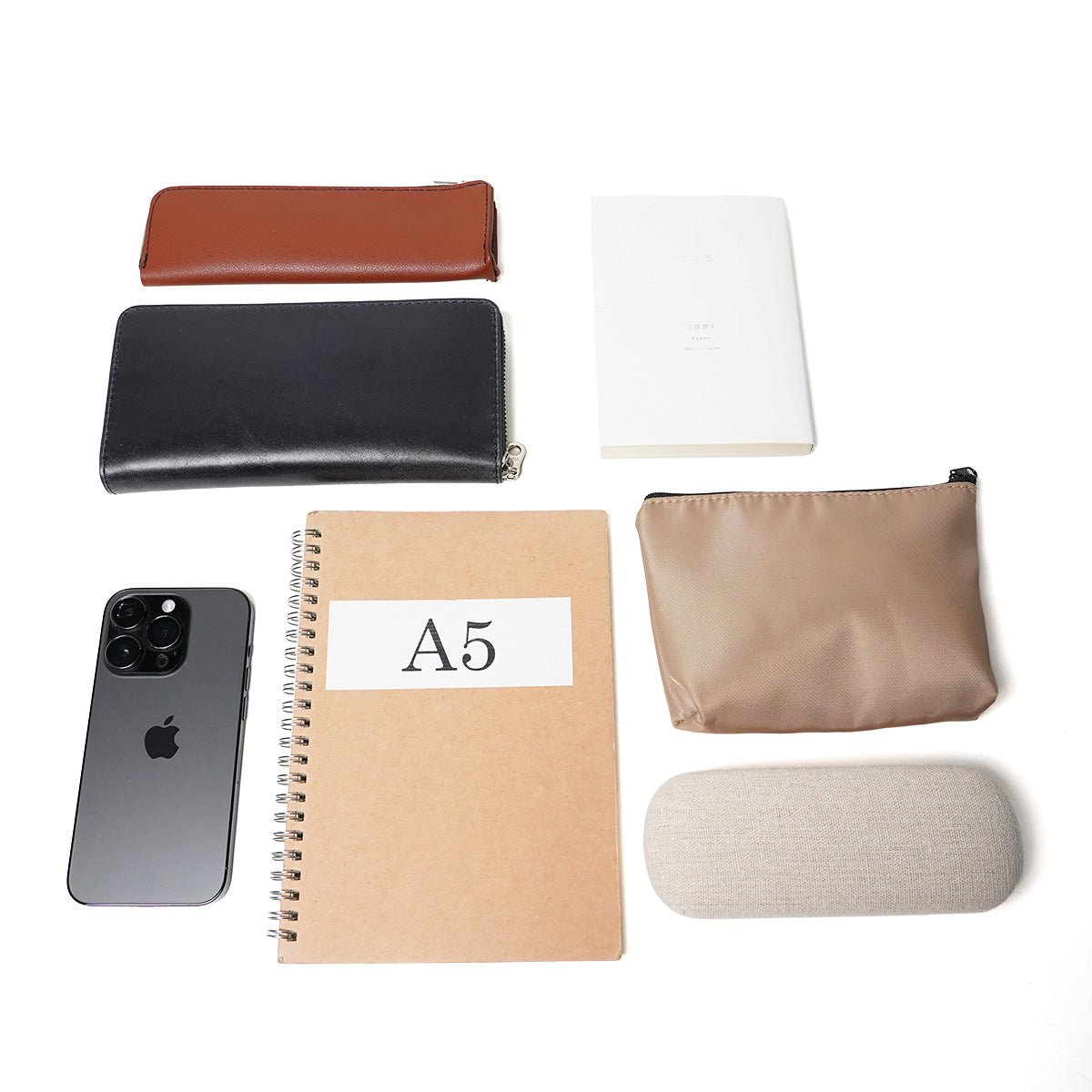
It offers more storage capacity than its appearance suggests, comfortably accommodating daily essentials, as well as B5-sized notebooks and tablets. It's perfect for a wide range of situations, from everyday use to short outings.
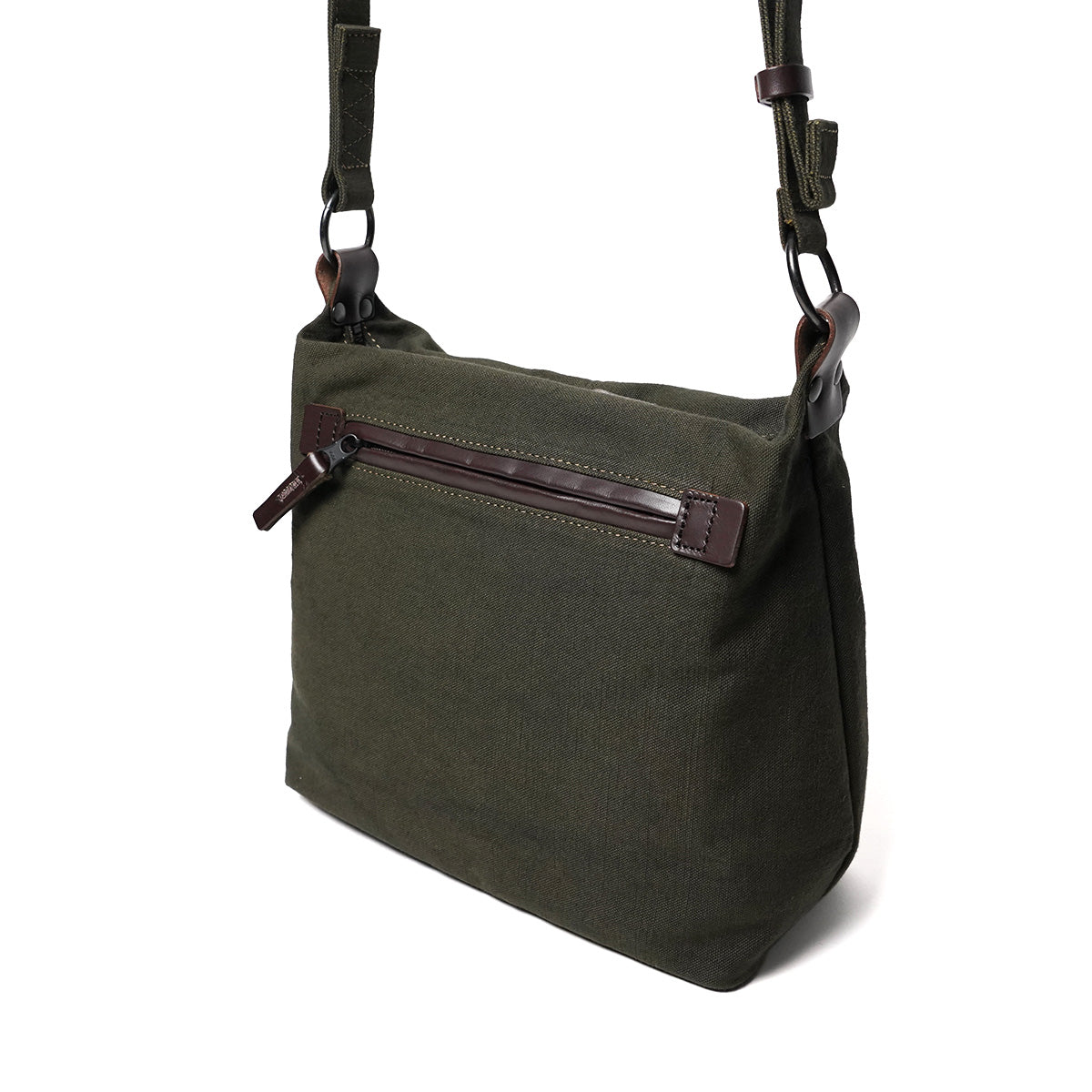
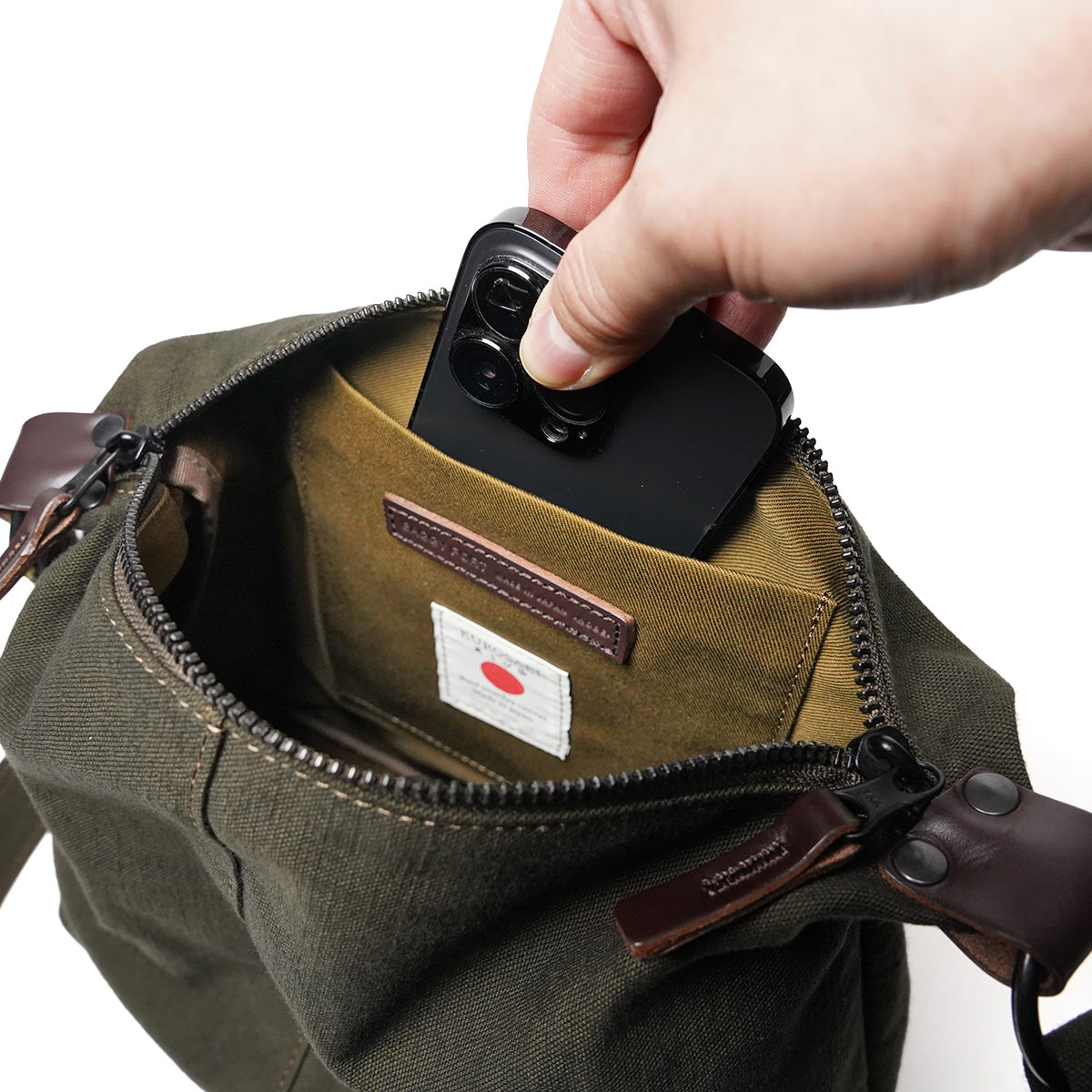
The bag is equipped with a zippered pocket on the back. This allows for secure storage of valuables and items you want to access quickly, such as smartphones and pass cases, emphasizing user convenience.
Simple yet focused on practicality, this bag subtly and reliably supports your daily life.
| Product Number | GRN9604 |
| Specifications |
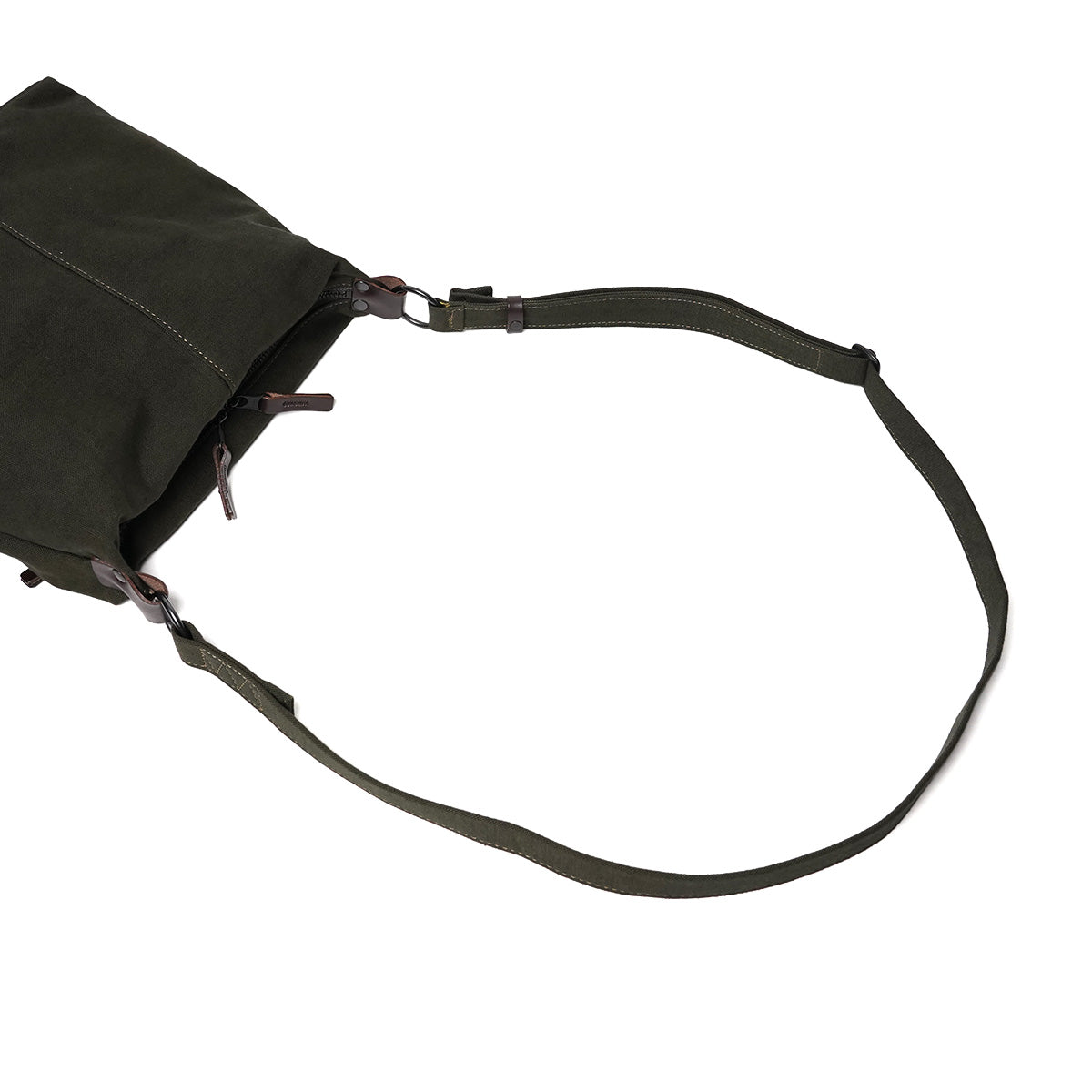
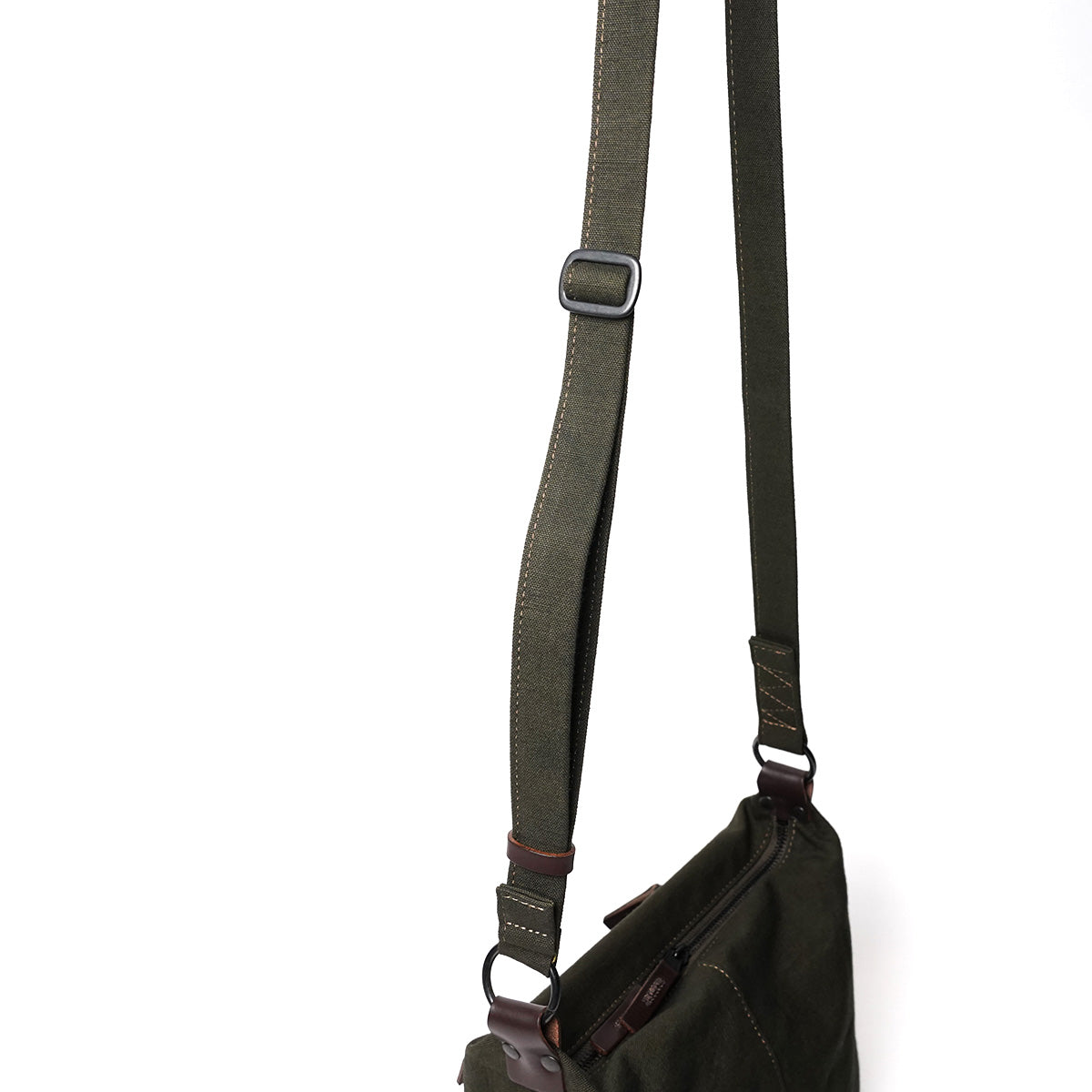
■Size (approximate measurements) H 22cm x W 24cm x D 24cm ■Weight 310g ■Main Opening 21cm ■Pockets (total 3) ○Outer Pocket: 1 Opening 14.5cm x Depth 17cm (zippered pocket) ○Inner Pocket: 1 Opening 14.5cm x Depth 14.5cm (open pocket) ■Strap Dimensions Width: 2.5cm Length: 35.5cm~123.5cm Height: 19cm~65cm Sliding type (stepless adjustment) |
| Material | 15oz Army Duck Canvas x Black Rust Dye |
| Country of Origin | Made in Japan |
We strive to represent the colors and textures of our products as close to the actual products as possible, but the colors may appear different from the actual product depending on the lighting conditions during photography and the settings of your monitor .
Please note that there may be slight differences in the dyeing finish depending on the production lot, and the color may differ from the image shown.
- If it gets wet, immediately wipe off the moisture with a dry cloth and dry it in the shade.
- Avoid high temperatures and humidity and store in a well-ventilated place.
- If you are concerned about stains, avoid washing the entire item as it is machine washable. Instead, gently pat the area with a soft cloth or sponge using lukewarm water and a mild detergent. Be careful with the leather parts.
Nationwide flat rate of 500 yen (tax included)
Free shipping for orders totaling 3,900 yen or more
This product is in stock at multiple stores.
Therefore, depending on when you place your order, the item may be out of stock.
If we are unable to secure stock, we will contact you by email after you place your order.
Choose options

ALBERTON
ALBERTON has a history of being adopted as the "US ARMY DUCK." It brings the military specifications of the past to modern times.
History and Origin
History and origins
ALBERTON was a large-scale spinning company that flourished in Maryland, USA, from the late 19th century to the early 20th century. As a central player in the US cotton market, it supplied duck fabric to the government and military, and during World War I it was widely adopted as "US ARMY DUCK."
Decline and inheritance of value
Decline and inheritance of value
Due to the Great Depression, the name of the town disappeared along with the company name in 1938, but the duck fabric business itself continued and expanded, and its quality and existence continue to hold value today as proof that it has supported the unknown behind-the-scenes development of the industry.
Revival in Japan and the present
Revival in Japan and the present
In 2016, the brand "ALBERTON®" was revived by a Japanese fabric producer, who produced duck fabric with selvedge stripes using old-fashioned power looms and the same manufacturing methods as those used at the time, breathing new value into the techniques and spirit of the past by bringing it back to life in the modern era.